
Manufacturing processes are the specific methodologies factories use to transform raw materials into finished goods. The five primary types of manufacturing processes include repetitive manufacturing, discrete manufacturing, job shop production, continuous process manufacturing, and batch process manufacturing. Selecting the correct process depends entirely on the product’s required volume, level of customization, and raw material state. Choosing the optimal manufacturing methodology is critical for businesses to maximize production efficiency, minimize operational waste, control inventory costs, and ensure scalable, high-quality output throughout the product’s entire lifecycle.
What Is A Basic Manufacturing Process?
Manufacturing processes, also known as production methods, are the heartbeat of the manufacturing industry. These processes are responsible for transforming raw materials into finished products and aligning production with consumer demand.
Types of Manufacturing Processes
Before deciding on the types of manufacturing processes, these are factors can be based on to determine:
- Market demand for products
- The condition and availability of raw materials, components, and chemicals
- Resource availability and the overall state of factories
These diverse manufacturing techniques each offer distinct advantages when applied appropriately.
Here, we’ll take a closer look at some of the most prominent types of manufacturing processes that fuel the global market.
1. Repetitive Manufacturing Process
Repetitive manufacturing involves the production of the same product, or a limited set of similar products, over and over. It’s a process that prioritizes efficiency and production consistency.
Repetitive manufacturing is often used in industries where large quantities of the same item are needed, such as in the automotive and electronics sectors. Production efficiency in production areas is achieved by setting up dedicated production lines, which reduce the need for customization.
2. Job Shop Manufacturing
Job shop manufacturing caters to customized and complex products. This manufacturing process is characterized by its adaptability to create complex and unique items tailored to customer orders. It’s commonly used for durable consumer goods, custom cabinets, and medical devices.
Job shops require flexible manufacturing systems and can involve substantial physical labor, but they excel at meeting specific customer demands.
3. Continuous Process Manufacturing
Continuous process manufacturing, as the name suggests, operates non-stop. This production method is employed in industries that produce large volumes of the same product at high speeds, meeting the constant consumer demand for items like granule materials, chemicals, and paper production.
Continuous processes are efficient and cost-effective but may lack the flexibility to adapt to changing customer demands as well as custom products. Industries such as oil refining and food production often rely on continuous processes for their efficiency and consistency.
4. Discrete Manufacturing
Discrete manufacturing shares similarities with repetitive manufacturing as it also operates on production lines or assembly lines. The finished goods are created during this process often vary considerably between manufacturing lines.
Manufacturers have the flexibility to structure their assembly line systems to accommodate varying final product and changeover frequencies. This approach enables them to manufacture a broader range of product designs, qualities, and quantities.
Discrete manufacturing generally takes a longer setup time. Industries that heavily rely on this custom manufacturing method encompass automakers, aircraft, clothing, smartphone, and toy manufacturers.
5. Batch Process Manufacturing
The batch process manufacturing technique differs quite a bit from continuous process manufacturing and is more similar to discrete and job shop manufacturing.
Batch process manufacturing entails producing items in specific quantities or “batches.” This method is suitable for industries where production requirements may change frequently. Raw materials are grouped together and processed simultaneously, allowing for flexibility in production.
It’s an ideal choice for scenarios where different product variants are necessary to meet customer demands. This manufacturing process is adaptable, but it may involve increased setup times between batches.
6. Additive Manufacturing
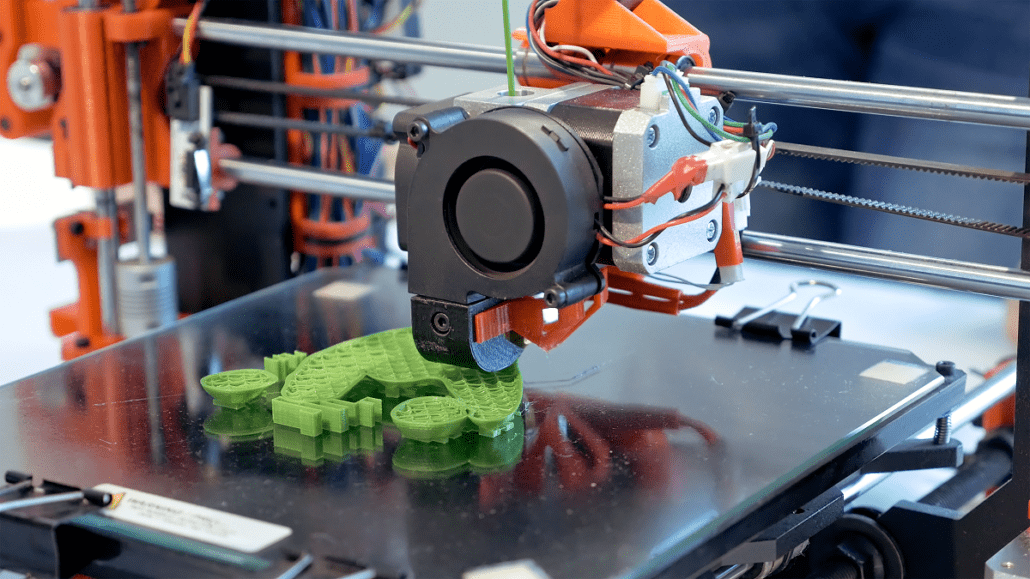
This is a bonus sixth manufacturing process which is also known as 3D printing thanks to technological advancements. 3D printing uses a digital model to make three-dimensional products layer by layer via various materials such as metals and plastics.
This type of manufacturing process has high startup costs, but it results in cost savings in other aspects.
The products manufactured through 3D printing encompass a wide spectrum, ranging from buildings, musical instruments, shoes, firearms, and prosthetic limbs, to medical devices.
Managing the Manufacturing Process
Each type of manufacturing process has its own strengths and limitations. Deciding on the appropriate process hinges on factors such as customer demand, production efficiency, and financial capital.
Understanding the nuances of these manufacturing methods is essential for manufacturers looking to optimize their operations and align their production with consumer demands and sales forecasts.
The selection of your production method depends on your manufacturing industry and the type of product you intend to produce. A hybrid manufacturing sometimes approach that combines multiple manufacturing processes can be beneficial when aiming to generate a variety of products.
After you’ve identified the most suitable manufacturing process, it becomes essential to harness appropriate manufacturing systems and make investments in the correct manufacturing technologies for effective process management. While your ERP and MES systems represent a positive move, they may lack the planning and scheduling functionalities needed to transform one manufacturing process into a genuinely efficient and streamlined manufacturing entity.
In the ever-evolving landscape of manufacturing, staying informed about the latest manufacturing techniques and technologies, including enterprise resource planning and manufacturing software, is crucial for those who seek to maintain a competitive edge. As consumer demands continue to evolve, manufacturers must remain agile and responsive to market trends, whether they produce custom products or mass-produced goods.
Manufacturing Process Bottlenecks
Manufacturing processes involve a series of interconnected steps, each reliant on the previous one to keep the production line moving smoothly. When one step in the production process lags or cannot keep up with the pace of the preceding or following steps, it creates a bottleneck. Bottlenecks have the potential to disrupt the entire production workflow, leading to delays, increased production costs, and missed deadlines.
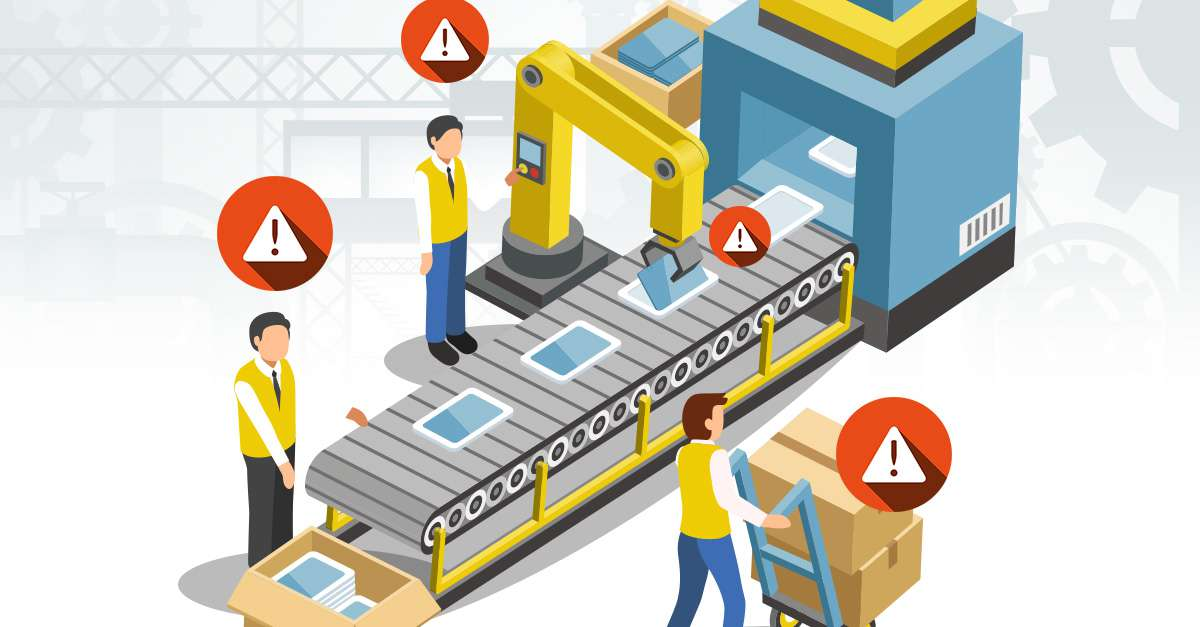
Common causes of manufacturing process bottlenecks
- Equipment Limitations: Outdated or insufficient machinery may not keep up with the required production speed, causing delays.
- Resource Constraints: Insufficient raw materials, labor shortages, or limited workspace can hinder the manufacturing process.
- Inefficient Workflow: Poorly designed production sequences or inefficient layouts can slow down the process.
- Quality Control: Extensive quality checks or frequent rework can bottleneck the production line.
- Complex Product Variants: A high degree of product customization may lead to bottlenecks due to longer setup times or production changes.
The Impact of Bottlenecks
Bottlenecks can have far-reaching consequences on manufacturing facilities and operations, including:
- Reduced Efficiency: Slower production leads to underutilized resources and increased manufacturing costs.
- Missed Deadlines: Delays in production can affect delivery schedules, dissatisfying customers.
- Higher Costs: Overtime and rush orders may be required to compensate for bottlenecks, driving up expenses.
- Quality Issues: Rushing through bottlenecked processes may result in compromised quality.
- Resource Wastage: Excess raw materials or inventory may accumulate when production is stalled.
Strategies for Resolving Bottlenecks
To mitigate manufacturing process bottlenecks, a multi-faceted approach is often necessary:
- Identify Bottlenecks: Pinpoint the exact location and cause of the bottleneck through careful analysis.
- Optimize Equipment: Invest in updated machinery or reconfigure existing equipment for better performance.
- Resource Management: Ensure a steady supply of materials and an adequately skilled workforce.
- Workflow Optimization: Streamline production sequences and layouts to reduce downtime.
- Quality Control: Implement efficient quality control measures without excessive delays.
- Product Standardization: Reduce product variants or standardize components to minimize setup times.
- Technology Integration: Utilize digital tools or manufacturing software, such as IoT sensors and data analytics, to monitor and predict bottlenecks.
- Continuous Improvement: Establish a culture of ongoing process improvement to prevent bottlenecks from recurring.
FAQ
The five primary types of manufacturing processes are repetitive, discrete, job shop, continuous process, and batch process manufacturing. Each methodology is uniquely designed to handle specific production volumes, material types, and levels of product customization required by the brand.
Repetitive manufacturing is a highly automated mass-production methodology where assembly lines run continuously to produce identical products 24/7. It is exceptionally cost-efficient for high-volume, low-complexity consumer goods like electronics, automotive parts, and standard household appliances.
Discrete manufacturing produces distinct, countable items like smartphones, furniture, or airplanes. Unlike process manufacturing, discrete products are assembled from separate components and parts. These items can theoretically be disassembled back into their original base components if necessary.
Job shop manufacturing focuses on producing small batches of highly customized or completely unique products. It relies on specialized manual labor and flexible machinery, making it ideal for custom aerospace components, bespoke machinery, or specialized medical equipment.
Continuous process manufacturing creates undifferentiated goods by mixing raw materials in a continuous, uninterrupted flow. It is used for liquids, gases, and powders, such as oil refining, chemical processing, and large-scale water purification, where the factory rarely stops running.
Batch process manufacturing produces goods in specific quantities or “batches” rather than a continuous flow. Once a batch is completed, the equipment is cleaned and prepared for the next run. This is standard in food production, pharmaceuticals, and cosmetics.
Discrete manufacturing assembles individual, countable parts (like screws and circuit boards) into a final product that can be disassembled. Process manufacturing blends indistinguishable raw materials (like chemicals or liquids) using formulas, creating a final product that cannot be reverse-engineered into its original state.
Companies choose a manufacturing process based on their expected customer demand volume, the required degree of product customization, and the physical nature of their raw materials. High volume demands repetitive lines, while high customization requires a flexible job shop approach.
Job shop manufacturing is absolutely the best choice for highly customized, low-volume products. Because it does not rely on rigid, automated assembly lines, human workers and versatile CNC machines can easily adapt to constantly changing product designs and bespoke client specifications.
Repetitive manufacturing is the most cost-effective methodology for high-volume products. By utilizing dedicated, automated assembly lines and standardizing every component, factories achieve massive economies of scale, drastically lowering the per-unit production cost and accelerating the time-to-market.
Yes, modern factories frequently use hybrid manufacturing approaches. For example, a facility might use batch process manufacturing to mix bulk raw plastics, and then use discrete manufacturing on a repetitive assembly line to mold and assemble those plastics into individual consumer electronic devices.
The manufacturing process heavily dictates inventory strategy. Repetitive manufacturing requires steady, Just-In-Time (JIT) deliveries of standard parts to prevent assembly line halts. Conversely, job shop manufacturing requires holding a diverse, flexible inventory of raw materials to accommodate unpredictable, customized orders.
Agile manufacturing is an advanced operational strategy that emphasizes extreme flexibility and speed. By integrating digital supply chain data, advanced robotics, and modular assembly lines, agile factories can instantly pivot production runs to meet sudden shifts in consumer demand or market trends.
3D printing, or additive manufacturing, often functions similarly to job shop manufacturing. It is primarily used for rapid prototyping, creating highly complex low-volume parts, and producing custom tooling jigs, eliminating the need to cut expensive steel molds for small production runs.
The chosen manufacturing process dictates the base production efficiency, labor requirements, and defect rates. Selecting the wrong process such as using a job shop for mass production drastically inflates labor costs, slows down output, and ultimately destroys the product’s Total Cost of Ownership (TCO).
Achieving Manufacturing Goals with SCM Solution
Whether you are a seasoned manufacturing professional or a curious newcomer, this guide is your gateway to understanding the diverse and fascinating world of manufacturing.
SCM Solution with many years of experience in managing different types of manufacturing processes, we support businesses by providing strategies and solutions at all stages of production processes for your projects.
We conduct factory audits, product inspections, production line oversight, and customization to optimize the efficient manufacturing process for your finished product. Get control over your projects with SCM Solution
Additional Resources
- Case Studies: How SCM Solution Helped Businesses Succeed
- Quality Inspection Service: What You Need To Know
- Choosing the Right SCM Services for Your Business
Follow our LinkedIn page to get further activities
Subscribe to Yvette’s LinkedIn newsletter to read more other case studies in supply chain
