

Comprehensive Guide to Metal Plating: Types of Finishes for Factory Owners
As a factory owner, the quality and durability of your products are paramount. One way to enhance both is through metal plating. Metal plating involves coating a metal object with a thin layer of another metal to improve various properties such as corrosion resistance, wear resistance, and aesthetic appeal. Understanding the different types of metal plating finishes can help you make informed decisions about which process will best meet your needs. In this guide, we will explore the most common types of metal plating finishes and their applications.
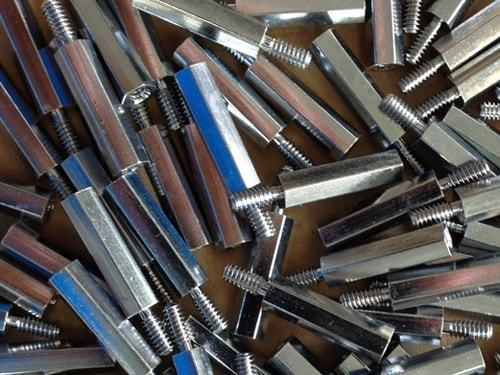
1. Electroplating
Electroplating is one of the most widely used metal plating methods. It involves using an electrical current to reduce dissolved metal cations so that they form a thin coherent metal coating on an electrode.
Applications
- Automotive Industry: Chrome plating for bumpers and trim to provide a shiny, durable finish.
- Electronics: Gold plating for connectors and circuit boards to improve conductivity.
- Jewelry: Silver and gold plating to enhance aesthetic appeal and prevent tarnish.
Benefits
- Provides excellent corrosion resistance
- Enhances electrical conductivity
- Improves wear resistance
- Offers a decorative finish
2. Electroless Plating
Unlike electroplating, electroless plating does not use electrical current. Instead, it relies on a chemical reduction process to deposit metal onto the substrate. This method is particularly useful for plating non-conductive surfaces.
Applications
- Aerospace: Nickel plating for engine components to increase corrosion and wear resistance.
- Industrial Equipment: Coatings for pumps and valves to enhance durability.
- Printed Circuit Boards (PCBs): Copper and nickel plating to improve solderability and corrosion resistance.
Benefits
- Uniform coating thickness even on complex geometries
- No need for electrical current
- Can plate non-conductive surfaces
- Excellent corrosion and wear resistance
3. Anodizing
Anodizing is an electrolytic process used mainly for aluminum. The process increases the thickness of the natural oxide layer on the surface of metal parts.
Applications
- Consumer Electronics: Protective and decorative finishes for smartphones and laptops.
- Aerospace: Enhancements for structural components to resist corrosion and wear.
- Automotive: Coatings for wheels and trims to provide a durable and appealing finish.
Benefits
- Superior corrosion resistance
- Increased surface hardness
- Wide range of color options for aesthetic purposes
- Environmentally friendly process
4. Galvanizing
Galvanizing involves coating iron or steel with a layer of zinc. This is done through hot-dip galvanizing, where the metal is submerged in molten zinc, or through electro-galvanizing, which uses electrical current.
Applications
- Construction: Structural steel components such as beams, columns, and fasteners.
- Agriculture: Fencing, gates, and other outdoor equipment.
- Automotive: Underbody components and frames to prevent rust.
Benefits
- Exceptional corrosion resistance, particularly in outdoor environments
- Cost-effective
- Long-lasting protection
- Provides a sacrificial layer that corrodes before the underlying metal
5. Powder Coating
Although not a traditional “plating” method, powder coating involves applying a dry powder to a metal surface and then curing it under heat to form a hard, protective layer.
Applications
- Appliances: Coatings for refrigerators, washers, and dryers to improve aesthetics and durability.
- Furniture: Protective and decorative finishes for metal chairs, tables, and fixtures.
- Automotive: Wheels, bumpers, and other components for enhanced appearance and protection.
Benefits
- Extremely durable and resistant to chipping and scratching
- Environmentally friendly with no solvent emissions
- Wide range of color and texture options
- Provides a uniform, thick coating without running or sagging
6. Zinc Plating
Zinc plating involves applying a thin layer of zinc to steel or iron to provide corrosion resistance. This is often done using an electroplating process.
Applications
- Fasteners: Screws, bolts, and nuts to prevent rust.
- Electrical Components: Switch gears and connectors for enhanced durability.
- Automotive: Small metal parts such as brackets and clips.
Benefits
- Good corrosion resistance
- Economical
- Provides a smooth, attractive finish
- Can be used as a base for further painting or powder coating
Conclusion
Choosing the right type of metal plating finish can greatly enhance the performance and longevity of your products. Whether you need superior corrosion resistance, enhanced aesthetic appeal, or improved wear resistance, there is a metal plating solution that fits your needs. By understanding the benefits and applications of each type of metal plating, you can make informed decisions that will benefit your factory operations and product quality in the long run.
For more detailed information or to explore how these metal plating methods can be applied to your specific needs, feel free to reach out to our team of experts. Your journey to superior product quality and performance starts here.
CONTACT US FOR A CONSULTATION FOR UNIQUE SUPPLY CHAIN PROBLEMS OR SOLUTIONS
