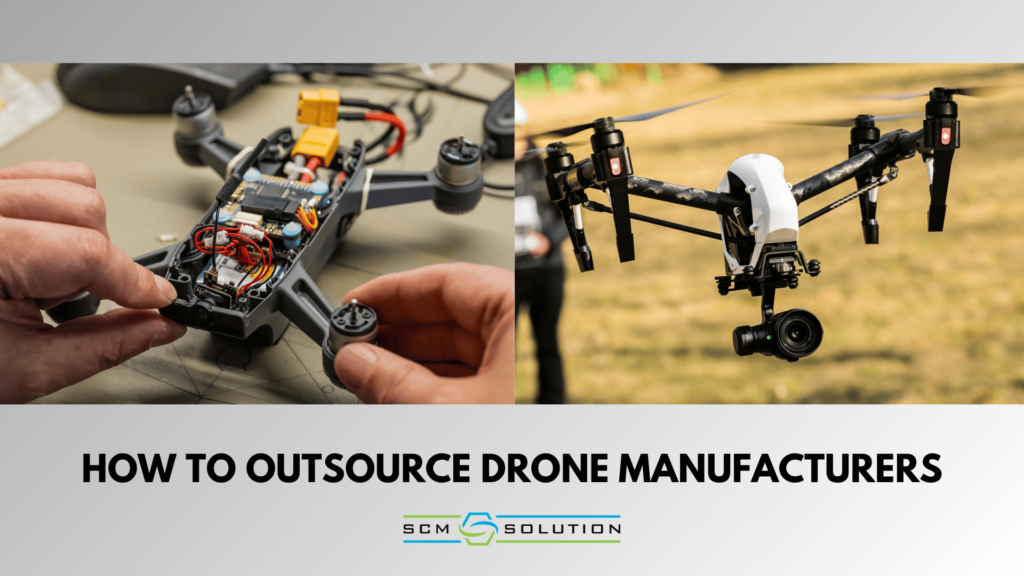
Outsourcing drone manufacturing requires a highly structured, step-by-step process to ensure product quality, protect intellectual property, and guarantee supply chain scalability. First, businesses must define exact technical specifications and Bill of Materials (BOM) requirements. Next, they must meticulously research and shortlist potential overseas factories, prioritizing regions like Taiwan for secure, non-Chinese production. The crucial third step involves conducting rigorous physical factory audits and requesting functional prototypes. Finally, buyers must negotiate strict manufacturing contracts, establish continuous quality control checkpoints, and partner with local supply chain experts to manage daily operations and prevent catastrophic international manufacturing failures.
Drones are revolutionizing industries ranging from agriculture and logistics to security and surveillance. Whether you are a business looking to develop consumer drones or high-end industrial UAVs, outsourcing the right manufacturer is crucial to ensuring quality, cost-efficiency, and scalability. This guide will walk you through the key steps to finding reliable drone manufacturers, highlight the benefits of outsourcing drones in Taiwan, and how SCM Solution can help streamline the process.
Step-by-Step Guide to Outsourcing the Right Drone Manufacturers
1. Define Your Requirements
Before you begin searching for drone suppliers, clearly define your project needs:
- Type of drone: Consumer, commercial, industrial, or military-grade
- Key features: Payload capacity, camera specifications, AI capabilities, battery life, GPS integration
- Compliance and certifications: ISO standards, CE, FCC, NDAA compliance
- Production volume: Prototype development, small-batch production, or mass manufacturing
- Budget and timeline: Cost constraints and expected delivery schedules
2. Identify Potential Drone Manufacturers
Outsourcing drone manufacturers requires thorough research to find the right one. Here are some key methods:
- Online B2B platforms: Alibaba, Global Sources, Made-in-China
- Industry directories: Drone Industry Insights, aerospace supplier listings
- Trade shows and exhibitions: CES, Commercial UAV Expo, China Hi-Tech Fair
- Networking and referrals: LinkedIn industry groups, professional drone associations
3. Evaluate Supplier Capabilities
Once you have a list of potential manufacturers, assess their credibility and capabilities based on the following:
- Experience & Expertise: Years in the drone industry, specialization, and customer portfolio
- Manufacturing capacity: Factory size, automation levels, production scalability
- R&D capabilities: Ability to customize designs and innovate with new technology
- Certifications & quality control: ISO 9001, NDAA compliance, third-party audit reports
4. Request Quotes and Samples
- Obtain detailed quotations covering pricing, MOQ (Minimum Order Quantity), lead times, and payment terms.
- Request product samples or prototypes to evaluate performance, build quality, and compliance.
5. Conduct Factory Audits & Quality Inspections
- If feasible, visit the factory to inspect manufacturing facilities and production processes.
- Alternatively, hire a third-party audit service for quality verification.
6. Negotiate Contracts & Secure Agreements
- Establish clear terms regarding pricing, lead times, product specifications, and after-sales support.
- Sign NDAs (Non-Disclosure Agreements) to protect intellectual property.
- Consider long-term partnerships for better pricing, priority production slots, and supply chain stability.
7. Start with a Trial Order
- Before committing to large-scale production, place a trial order to assess the supplier’s reliability.
- Conduct final inspections before shipment to ensure quality meets specifications.
8. Implement Ongoing Supplier Management
- Maintain regular communication with suppliers to monitor production progress.
- Set up quality control checkpoints throughout the manufacturing process.
- Establish contingency plans with backup suppliers to mitigate risks.
Benefits of Outsourcing Drone Manufacturing in Taiwan
Taiwan is emerging as a key hub for drone manufacturing due to its advanced technology sector and high manufacturing standards. Here are the top reasons to consider Taiwan for drone outsourcing:
1. Strong Aerospace & Electronics Industry
Taiwan is home to leading tech manufacturers specializing in semiconductors, batteries, and AI-driven solutions, key components in advanced drone technology.
2. High-Quality Manufacturing Standards
Taiwanese manufacturers adhere to stringent ISO, CE, and FCC certifications, ensuring high-quality production and compliance with international regulations.
3. Advanced R&D and Innovation
Taiwan is investing heavily in AI, 5G, and autonomous systems, making it an ideal location for cutting-edge drone development.
4. Cost-Effective Production Compared to Western Markets
While maintaining premium quality, Taiwan offers competitive production costs compared to manufacturers in the U.S. or Europe.
5. Proximity to Supply Chain & Logistics Hubs
Taiwan’s location in Asia allows for efficient logistics and shipping, reducing lead times for global distribution.
How SCM Solution Helps Customers Outsource Drone Manufacturing
SCM Solution specializes in helping businesses efficiently outsource supply chain operations, including drone manufacturing. Here’s how we assist our clients:
1. Supplier Identification & Vetting
SCM Solution leverages its industry network to identify and evaluate the best drone manufacturers in Taiwan and across Asia. We conduct background checks, audits, and factory inspections to ensure reliability.
2. Negotiation & Contract Management
Our team helps businesses secure competitive pricing, clear contractual terms, and protect intellectual property through NDAs and strategic partnerships.
3. Quality Control & Compliance Assurance
We conduct rigorous quality checks at multiple production stages and ensure compliance with international regulations like ISO, CE, and NDAA standards.
4. Supply Chain Optimization & Logistics Support
From raw material sourcing to final product delivery, we handle logistics, warehousing, and freight management to ensure on-time and cost-effective delivery.
5. Risk Management & Contingency Planning
To mitigate potential supply chain risks, we provide alternative supplier options and contingency strategies, ensuring smooth and uninterrupted production.
FAQ
The first step is thoroughly defining your technical specifications by creating a comprehensive Product Requirements Document (PRD) and a detailed Bill of Materials (BOM). This explicit documentation guarantees the overseas factory understands your exact aerodynamic, software, and hardware requirements before quoting.
You can find reliable manufacturers through specialized aerospace trade shows, vetted B2B directories, or industry referrals. However, the safest and most efficient method is hiring a localized Supply Chain Management (SCM) partner who already possesses an established network of trusted, high-tech factories.
A Product Requirements Document (PRD) is critical because it acts as the absolute master blueprint. It dictates every physical dimension, flight capability, and software integration required. Without a strict PRD, factories will make unauthorized assumptions, inevitably leading to defective prototypes and massive delays.
A drone’s Bill of Materials (BOM) must meticulously list every single physical component required for assembly. This includes specific microchips, flight controllers, brushless motors, carbon-fiber chassis parts, and camera gimbals. A detailed BOM prevents factories from secretly using cheap, inferior substitute materials.
Vet overseas manufacturers by rigorously checking their ISO 9001 quality certifications and demanding case studies of past drone projects. You must verify they have actual in-house engineering capabilities, strict data security protocols, and the physical assembly line capacity to handle your required volume.
Physical factory audits are absolutely mandatory to prevent outsourcing scams. Remote buyers often accidentally hire “trading companies” posing as factories. An on-site audit verifies the supplier actually owns the advanced CNC machinery and cleanrooms required to manufacture complex, high-precision drone hardware.
Prototyping proves that the factory can successfully translate your digital CAD files into a functional, physical product. By executing Engineering Validation Tests (EVT) and Design Validation Tests (DVT), buyers can identify and resolve critical mechanical flaws long before expensive mass production begins.
Protect your Intellectual Property (IP) by utilizing strictly localized Non-Disclosure, Non-Use, and Non-Circumvention (NNN) agreements. Additionally, businesses should fragment their supply chain, manufacturing the core printed circuit boards (PCBA) and the physical drone chassis at entirely different, unconnected factory locations.
A bulletproof manufacturing contract must explicitly define Minimum Order Quantities (MOQs), exact unit pricing, strict Acceptable Quality Limit (AQL) standards, and delivery lead times. It must also include severe financial penalties for delayed shipments or defective batches to hold the supplier legally accountable.
Western defense contractors and government agencies must avoid Chinese factories to strictly comply with National Defense Authorization Act (NDAA) regulations. Using restricted Chinese microchips or flight controllers completely disqualifies the drone from lucrative government contracts due to severe national cybersecurity risks.
Ensure quality control by implementing strict Standard Operating Procedures (SOPs) on the assembly line. Buyers must hire independent, third-party engineers to conduct During Production Inspections (DPI) and Pre-Shipment Inspections (PSI), instantly catching defective units before they leave the overseas factory floor.
A Golden Sample is the absolute perfect, fully functional prototype that the buyer has officially approved. Quality control inspectors use this specific physical unit as the definitive baseline on the factory floor, comparing all mass-produced drones directly against it to ensure absolute consistency.
The biggest mistake is rushing directly from a crude prototype to mass production without executing Design for Manufacturing (DFM). This fatal error results in unscalable assembly processes, catastrophic factory tooling failures, and massive financial losses due to incredibly high defect rates.
Transitioning to mass production requires executing a Production Validation Test (PVT). A small batch of drones is built using the final factory tooling and assembly line workers. This critical phase calibrates machinery and finalizes SOPs, proving the factory can consistently manufacture high-quality units.
An SCM partner acts as your dedicated local operations team in Asia. They bypass complex language barriers, physically audit factories, aggressively negotiate raw material costs, and enforce strict quality control, ensuring your drone manufacturing process scales seamlessly without requiring you to travel.
Conclusion
Outsourcing drone manufacturing requires careful planning, supplier evaluation, and ongoing quality management. Taiwan presents a compelling choice due to its technological expertise, high manufacturing standards, and cost-effectiveness. With SCM Solution’s extensive experience in supply chain management, businesses can confidently outsource drone production while ensuring quality, efficiency, and reliability.
If you are looking for trusted drone manufacturers and seamless outsourcing support, SCM Solution is here to help. Contact us today to start your outsourcing journey!
Read other related articles:
Subscribe to Yvette’s LinkedIn newsletter to read more other case studies in supply chain
CONTACT US FOR A CONSULTATION FOR UNIQUE SUPPLY CHAIN PROBLEMS OR SOLUTIONS
