
Social Compliance Considerations for Product Developers in Electronics
In the world of electronics, product developers are responsible for creating innovative and functional devices that comply with environmental standards and ethical labor practices. Social compliance entails adhering to a set of rules or standards that aim to protect workers’ rights and promote responsible environmental stewardship throughout the supply chain. Below are some crucial considerations for product developers in the electronics industry:
1. Ethical Labor Practices
- Ensure that all labor laws and regulations are strictly followed to prevent any form of exploitation.
- Prohibit child labor, forced labor, and any form of harassment or abuse.
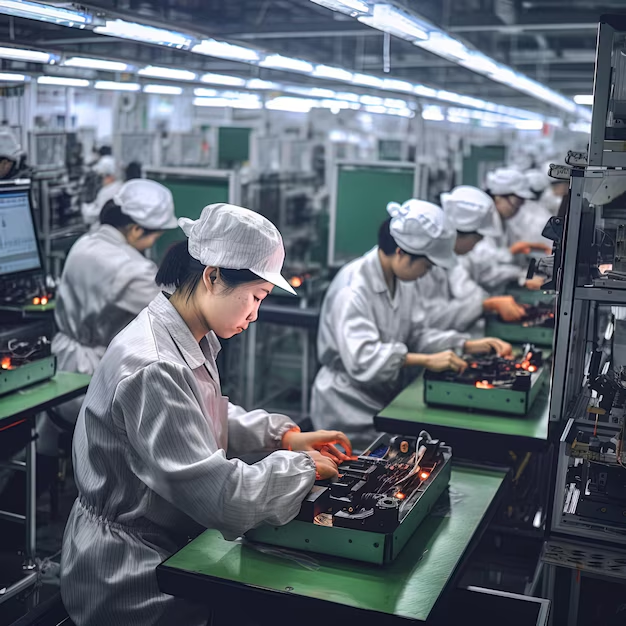
- Support fair working conditions, including reasonable work hours, overtime compensation, and the right to collective bargaining.
- Provide a safe and healthy working environment to prevent accidents and injuries.
2. Fair Wages and Benefits
- Pay at least the minimum wage as mandated by local regulations and provide wage statements to workers.
- Offer benefits such as health care, paid leave, and retirement plans when possible.
3. Environmental Impact Reduction
- Integrate sustainable design principles to minimize environmental impact throughout the product lifecycle.
- Use materials that are sustainable, recyclable, and reduce the need for new raw resources.
- Implement processes and technologies that reduce waste, manage chemicals responsibly, and conserve water and energy.
- Comply with all relevant environmental regulations, including waste management and emissions standards.
4. Conflict-Free Sourcing
- Source raw materials responsibly and avoid conflict minerals that finance armed groups in conflict regions.
- Conduct due diligence in the supply chain to ensure transparency and certify that materials are obtained legally and ethically.
5. Transparency and Traceability
- Maintain transparency in your supply chain, enabling traceability from raw materials to finished products.
- Regularly audit suppliers and facilities to assure continued compliance with social and environmental standards.
6. Consumer Privacy and Data Security
- Protect consumer privacy by implementing stringent data security measures and following best practices in information security.
- Ensure electronic products comply with data protection regulations such as GDPR or CCPA.
7. End-of-Life Management
- Provide clear guidelines on the proper disposal and recycling of electronic products at the end of their life cycle to avoid environmental harm.
- Encourage take-back or recycling programs and consider circular economy models.
8. Continuous Improvement
- Develop policies and procedures for continuous improvement in the areas of human rights, labor standards, environmental protection, and business ethics.
- Provide training to employees and stakeholders on compliance and ethics.
9. Partnering with NGOs and Industry Consortia
- Collaborate with non-governmental organizations (NGOs) and industry consortia to stay informed about best practices and emerging social compliance issues.
- Participate in initiatives and certification programs that drive social and environmental progress in the electronics industry.
10. Report and Communicate
- Publish regular reports on social compliance and sustainability efforts to demonstrate transparency and accountability.
- Engage in open dialogue with stakeholders, including customers, to discuss challenges and progress toward social compliance goals.
Product developers in electronics must do more than just design great products. They need to ensure that their innovations are also socially responsible, supporting fair labor practices, and mitigating environmental impacts. By making social compliance a core part of product development, companies can foster more sustainable business practices and contribute positively to society.
CONTACT US FOR A CONSULTATION FOR UNIQUE SUPPLY CHAIN PROBLEMS OR SOLUTIONS
