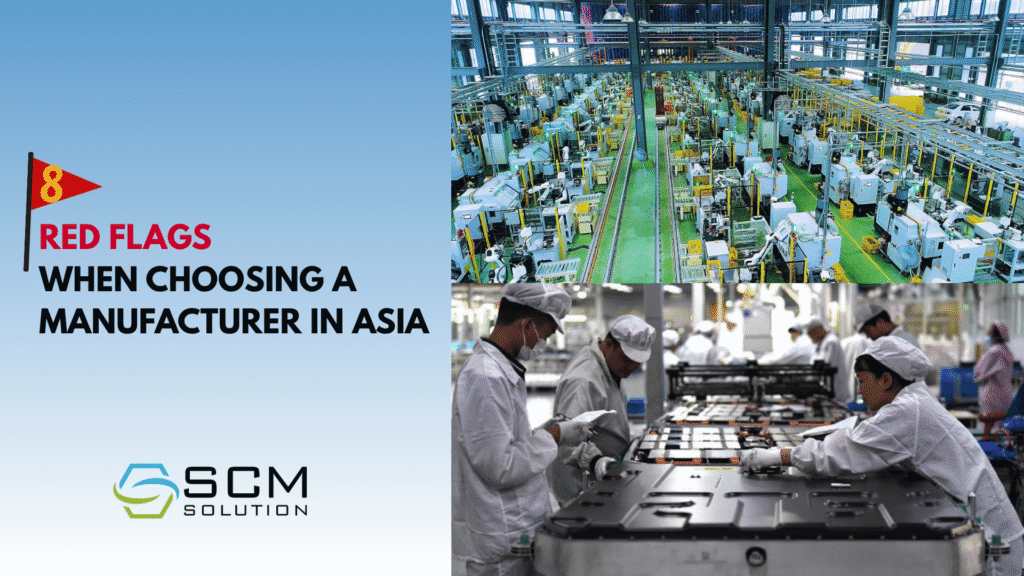
Finding the right manufacturing partner in Asia can be the difference between success and costly failure. At SCM Solution, we’ve seen firsthand how working with the wrong supplier, especially one that’s not what they claim to be, can lead to delays, quality issues, and even financial loss.
Here are 8 common red flags to watch out for when evaluating manufacturers in China, Vietnam, Taiwan, or elsewhere in Asia, and how SCM Solution’s supplier verification process helps you identify and avoid them early on.
🚩 1. The Supplier Claims to Be a Factory, but Isn’t
It’s common for trading companies to pose as factories. They often create polished websites and even stage photos to appear as if they own production lines. However, they may actually outsource the work to subcontractors you’ve never vetted, leaving you with less control over quality, lead time, and cost.
Read more: Factory vs. Trading Company: The Difference When Sourcing

🚩 2. They Avoid Factory Audits or Visits
Suppliers who are reluctant to allow visits or audits often have something to hide, such as poor working conditions, outdated machinery, or the fact that they don’t produce the goods themselves. Refusing third-party verification is a major red flag and should not be ignored.
🚩 3. They Offer a Wide Range of Unrelated Products
A real manufacturer typically specializes in a specific product category. If a supplier claims to produce clothing, electronics, packaging, and kitchenware all under one roof, it’s likely they’re a trading company sourcing from various factories. This kind of model can lead to inconsistent quality and poor oversight.
🚩 4. The Price Seems Too Good to Be True
If a supplier offers a quote far below market rates, it might be cutting corners—on materials, labor, or processes. In worst-case scenarios, they lure buyers with low prices, take deposits, and disappear—or deliver a product that fails quality standards.
🚩 5. Poor or Inconsistent Communication
Clear, responsive communication is essential in manufacturing partnerships. Delayed responses, vague answers, or frequent misunderstandings can signal a lack of professionalism or worse, that the supplier doesn’t fully understand your requirements. This often leads to production errors and missed deadlines.
🚩 6. No Track Record or Verified References
A trustworthy supplier should be able to provide verifiable business records, export experience, and references from past clients. If they hesitate or change the subject, it could mean they’re new, untested, or have a history of dissatisfied customers.
🚩 7. Vague or Incomplete Paperwork
Professional manufacturers will readily provide business licenses, certifications, and clear contracts. If documentation is missing, inconsistent, or overly vague, this is a serious warning sign, especially when it comes to intellectual property rights, payment terms, and liability in case of defects.
🚩 8. Shifting Lead Times or Unclear Delivery Schedules
Reliable factories operate on defined production plans and timelines. If a supplier frequently changes the delivery date or avoids giving a clear schedule, it may be due to overbooking, lack of capacity, or internal disorganization—all of which can cause costly delays.
How to Protect Yourself When Sourcing in Asia
These red flags often don’t show up until it’s too late, after the deposit is paid, or worse, after the product is delivered with issues. That’s why supplier verification is a critical step in your sourcing process.
At SCM Solution, we help international buyers identify trustworthy suppliers across Asia by providing:
- On-the-ground factory audits
- Supplier background checks and license verification
- Communication support and documentation reviews
- Production capability assessments and sample evaluations
We act as your trusted sourcing partner to minimize risk and build reliable manufacturing relationships.
Need help verifying a supplier or setting up a sourcing project in Asia? Get in touch today.
Additional Resources
- Case Studies: How SCM Solution Helped Businesses Succeed
- Quality Inspection Service: What You Need To Know
- Read other related articles: Choosing the Right SCM Services for Your Business
Follow our LinkedIn page to get further activities
Subscribe to Yvette’s LinkedIn newsletter to read more other case studies in supply chain
